Small-Life Supplies manufacture insect cages and breed stick insects and butterflies
| FEEDING | |
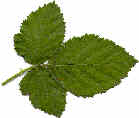 |
Most types eat bramble (blackberry) leaves. The Latin name for bramble is Rubus discolor. Many stick insects also eat eucalyptus. The Indian stick insect (the most common variety) also eats privet and ivy leaves. Peruvian Fern stick insects only eat fern. Spray leaves every day or so with water. Do not get the stick insects wet. |
| HOUSING | |
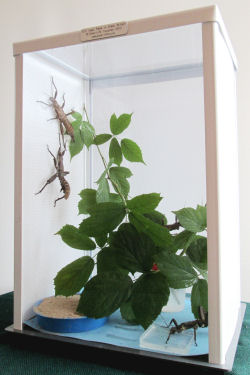 |
The
cage needs to be tall (51cm, 20") so they have room to grow. It needs mesh sides so the insects can get a good grip. Stick insects have claws on their feet and need to hook them round a rough surface to climb. Many stick insects like lots of air and so must be kept in a cage with ventilated sides. The ELC cage is great for stick insects. This cage has two sides full of specially made holes, allowing the stick insects to breathe and climb easily. Keep it clean by lining the base with a ELC Liner, changed weekly. |
| HANDLING | |
 |
Many stick insects are good to handle. Lift adults by the middle of their bodies and medium-sized insects by their tails. It's best not to touch baby stick insects as they are delicate. |
| TEMPERATURE | |
 |
Stick insects do not need heated cages. They do well in a room that is comfortably warm in the day and cooler at night. Avoid putting the cage on a windowsill as the insects may overheat in the summer and get too cold in the winter. |
| FURTHER INFORMATION | |
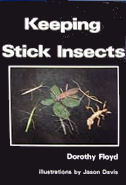 |
A
good book to read is "Keeping Stick Insects" by Dorothy Floyd. She is
Britain's stick insect expert and writes with enthusiasm. Find out about the
different species, breeding, practical tips, lifecycle information etc.
"Keeping Stick Insects" has colour photos, lots of illustrations and has already been reprinted four times! Order it direct from Small-Life Supplies or by phoning 01733 913480. |
| These Care sheets are produced by Small-Life Supplies to generate more interest in the hobby and are copyright free. Please print this sheet if you need more copies. |
|
To return to the Small-Life Supplies Web pages click one of the following:
| Small-Life Supplies |
Stick insect cages and enclosures |
Living stick insects ready now |
Clearance & sale items  |
Knowledge Base |
Lab Insect rearing cages |
About Us |
FAQs |
Reviews |